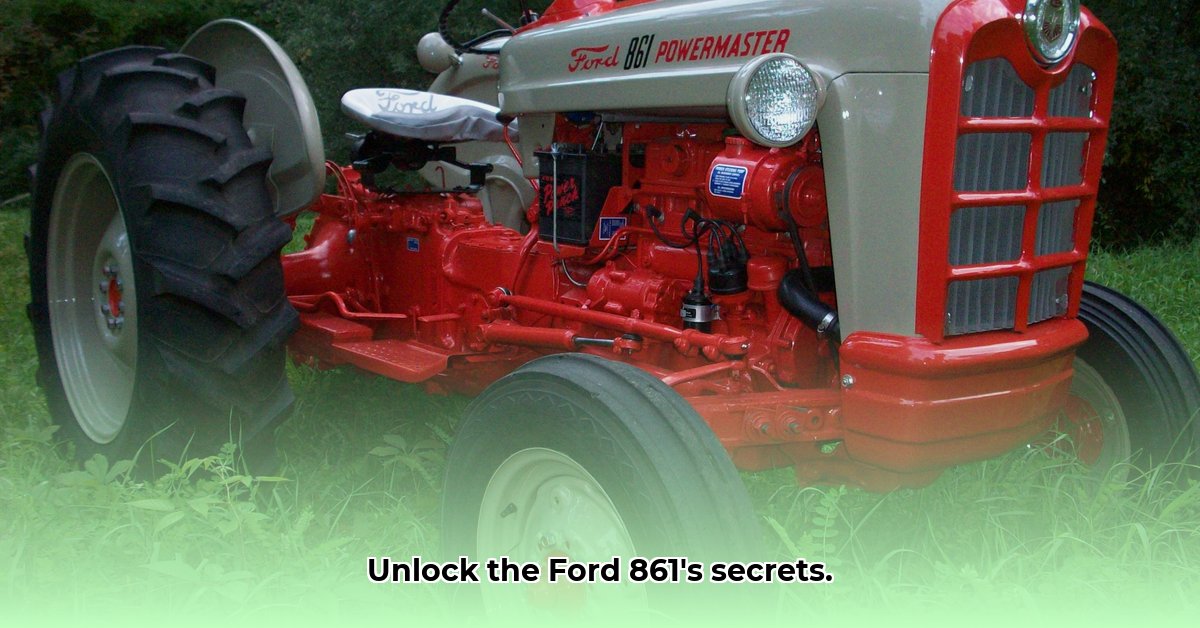
Ford 861 Tractor: A Historic Overview
The Ford 861 Powermaster, produced between 1958 and 1962, represents a significant chapter in agricultural history. This two-wheel-drive (2WD) tractor offered farmers a robust and reliable machine, available with gasoline, liquid propane (LP) gas, or diesel engines. Its simple yet effective design, featuring a 2.8-liter, four-cylinder engine and a 5-speed unsynchronized transmission (requiring practiced shifting), provided sufficient power for various farming tasks. Its Category I 3-point hitch and live power take-off (PTO) facilitated the use of various implements. While seemingly basic compared to modern tractors, the 861's durable construction and versatile engine choices cemented its place as a dependable workhorse for its time. Isn't it remarkable how such straightforward engineering could be so effective? The Ford 861's impact extends beyond functionality; it represents a significant step in the evolution of farm machinery, marking a transition towards more powerful and efficient agricultural tools. For carburetor issues, see this helpful resource: Ford 861 Carburetor.
Operating Your Ford 861: A Practical Guide
Operating the Ford 861 is a rewarding but unique experience requiring a different approach than modern tractors. The unsynchronized transmission demands smooth, deliberate shifts, avoiding jerky movements. Mastering this takes practice, but the resulting proficiency is highly satisfying. Here's a step-by-step guide:
Starting: The starting procedure varies based on the engine type (gasoline, LP gas, or diesel). Consult your owner's manual or reliable online resources for specifics. Ensure you understand the proper procedure before attempting to start your tractor.
Transmission: Shift gears smoothly and deliberately, anticipating the next gear change. Avoid rushing the process. The unsynchronized transmission requires a gentler touch than modern synchronized transmissions.
PTO Engagement: Engage the PTO only when the tractor is completely stationary and the implement is disengaged. This crucial safety step prevents damage and avoids injury.
3-Point Hitch Operation: Raise and lower implements with care. Never exceed the hitch's weight capacity. Overloading can damage the tractor and create dangerous situations.
Braking: Use brakes smoothly and consistently. Avoid hard braking, which can be less effective and damaging to older braking systems.
Ford 861 Maintenance: Keeping it Running Smoothly
Regular maintenance is paramount for ensuring your Ford 861's longevity. Consider these essential maintenance tasks:
Fluid Checks: Regularly check engine oil, transmission fluid, and coolant levels. Low levels can result in poor performance and potential damage.
Lubrication: Many components have grease fittings requiring regular lubrication. This prevents wear and tear, prolonging component life.
Cleaning: Regular cleaning removes dirt and debris, improving visibility and preventing corrosion.
Tire Pressure: Correct tire pressure is crucial for performance, traction, and preventing uneven wear. Maintaining optimal tire pressure is often overlooked, leading to performance and longevity issues. Did you know that maintaining proper tire inflation can improve fuel efficiency?
Ford 861 Restoration: A Guide to Revival
Restoring a Ford 861 is a labor of love and an opportunity to preserve a piece of agricultural history. Here's a breakdown of the process:
Parts Sourcing: Locating parts can be a challenge. Online forums dedicated to vintage tractors, specialized dealers, and even scrapyards can prove invaluable. Persistence is key!
Expert Assistance: Don't hesitate to seek professional help for complex repairs or tasks beyond your skill set. This ensures that the restoration is performed correctly and efficiently.
Preserving Originality: Where possible, strive to maintain the tractor's original components and characteristics. This preserves its historical integrity and value. Restoring a Ford 861 is not merely a mechanical exercise but a commitment to preserving its historical significance.
Troubleshooting Common Ford 861 Problems
Even well-maintained machines encounter issues. Here's a guide for addressing some common Ford 861 problems:
| Problem | Possible Causes | Solutions |
|---|---|---|
| Difficult Starting | Low battery, fuel issues, ignition problems | Inspect battery, check fuel system, test ignition system |
| Transmission Problems | Worn gears, insufficient lubrication | Repair or replace worn parts, lubricate thoroughly |
| 3-Point Hitch Malfunction | Worn linkages, hydraulic system issues | Repair or replace worn components, check fluid levels |
| Electrical Issues | Damaged wiring, faulty components, corrosion | Inspect wiring, replace faulty parts, address corrosion |
Remember, consulting a vintage tractor specialist can be invaluable for diagnosing and resolving complex problems.
Is a Ford 861 Right for You?
The Ford 861 offers a unique connection to agricultural history. Owning one requires mechanical aptitude, patience, and a willingness to learn. Before acquiring a Ford 861, honestly assess your mechanical skills, available resources, and commitment to potential challenges. Are you prepared for the involved maintenance and restoration demands? Consider this carefully before making your decision.